



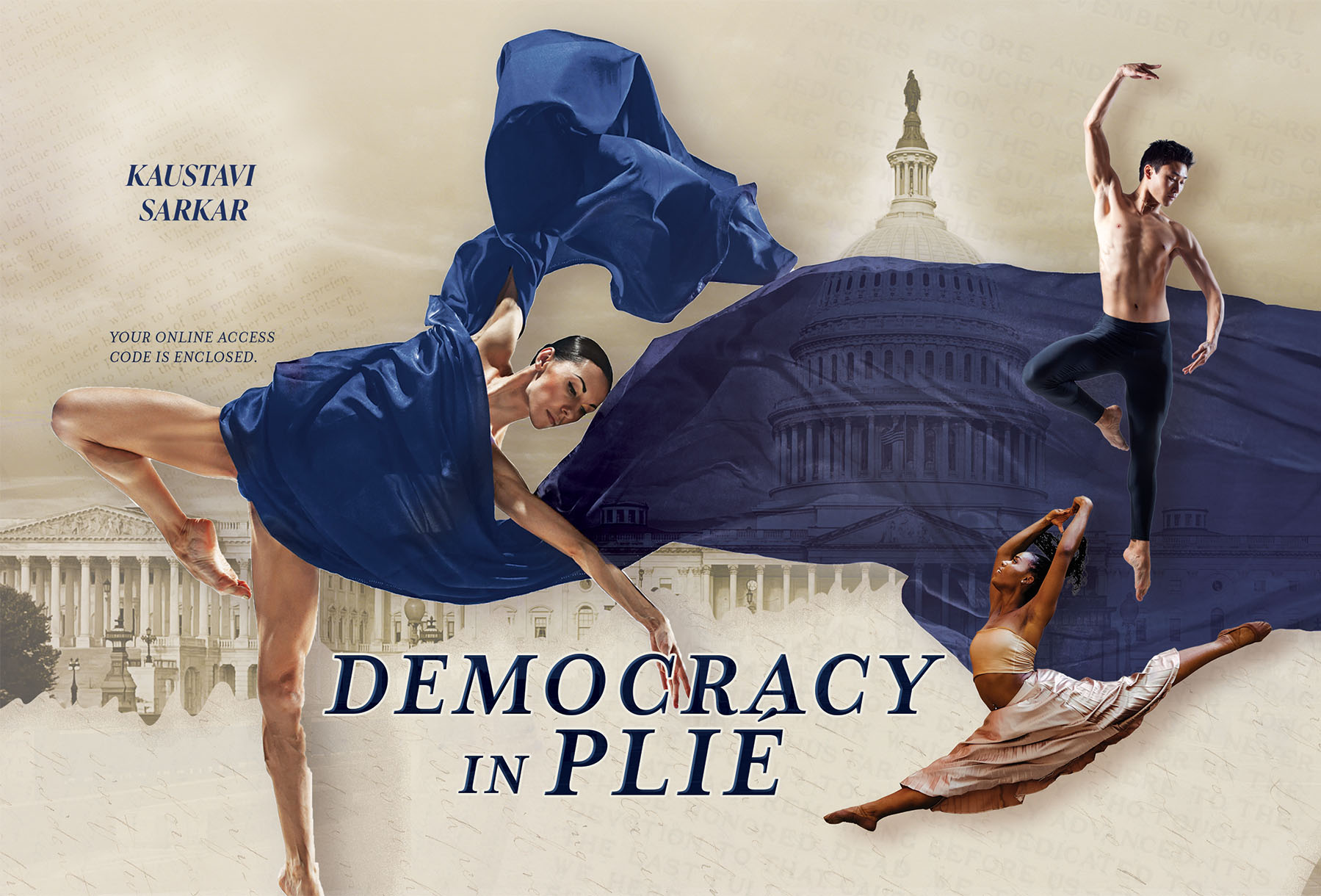
Democracy in Plié invites students to explore the relationship between dance, democracy, and civic life by examining how movement reflects, shapes, and challenges social values. There are five units connecting to foundational artifacts of American democracy including Declaration of Independence, Constitution, Federalist Papers, Emancipation Proclamation, Gettysburg Address, and Letter from a Birmingham Jail. Across Civil war to Civil Rights, dance has played a significant role blending aesthetics and politics. The text begins with the essential question, “What is democracy?" Further, it expands students' understanding beyond government and elections to include everyday practices of inclusion, voice, agency, and belonging. Students examine how dance has responded to social movements, struggles for equity, cultural preservation, migration, nationalism, and globalization. Through examples from diverse dance traditions, choreographers, and performance practices, the text connects artistic creation to its historical, political, and cultural environments. By linking embodied experience with democratic ideals, Democracy in Plié encourages students to critically analyze how movement can both reflect society and imagine more just and inclusive futures.
Introduction: Gesturing Towards Freedom
Unit 1: Monumental Declarations
- 1.1: 1776
- 1.2: Operatic Declarations
- 1.3: Tense Declarations
Unit 2: Powerful Gestures
- 2.1: Moving with the Constitution
- 2.2: Choreographing Presidency: Dance of the Executive Branch of the Constitution
- 2.3: Persuasive Bodies: Intersections of Dance and Law in the United States
Unit 3: Choreographic Meaning-Making
- 3.1: Republic of the Common Good
- 3.2: Dramatizing Politics
- 3.3: John Jay, An Abolitionist
Unit 4: Dancing the Conflict
- 4.1: Lamenting Destiny
- 4.2: Moving with the Emancipation Proclamation
- 4.3: A Good Man: Wartime Proclamations and the Arts
Unit 5: Dancing Dreams
- 5.1: Dreams of the Mountaintop: The Life and Legacy of Martin Luther King Jr.
- 5.2: Reorienting Time Across the Sacred, the Secular, and the Patriotic
- 5.3: Sermonic Deconstructions in Bondage: The Iconic "Letter from Birmingham Jail"