



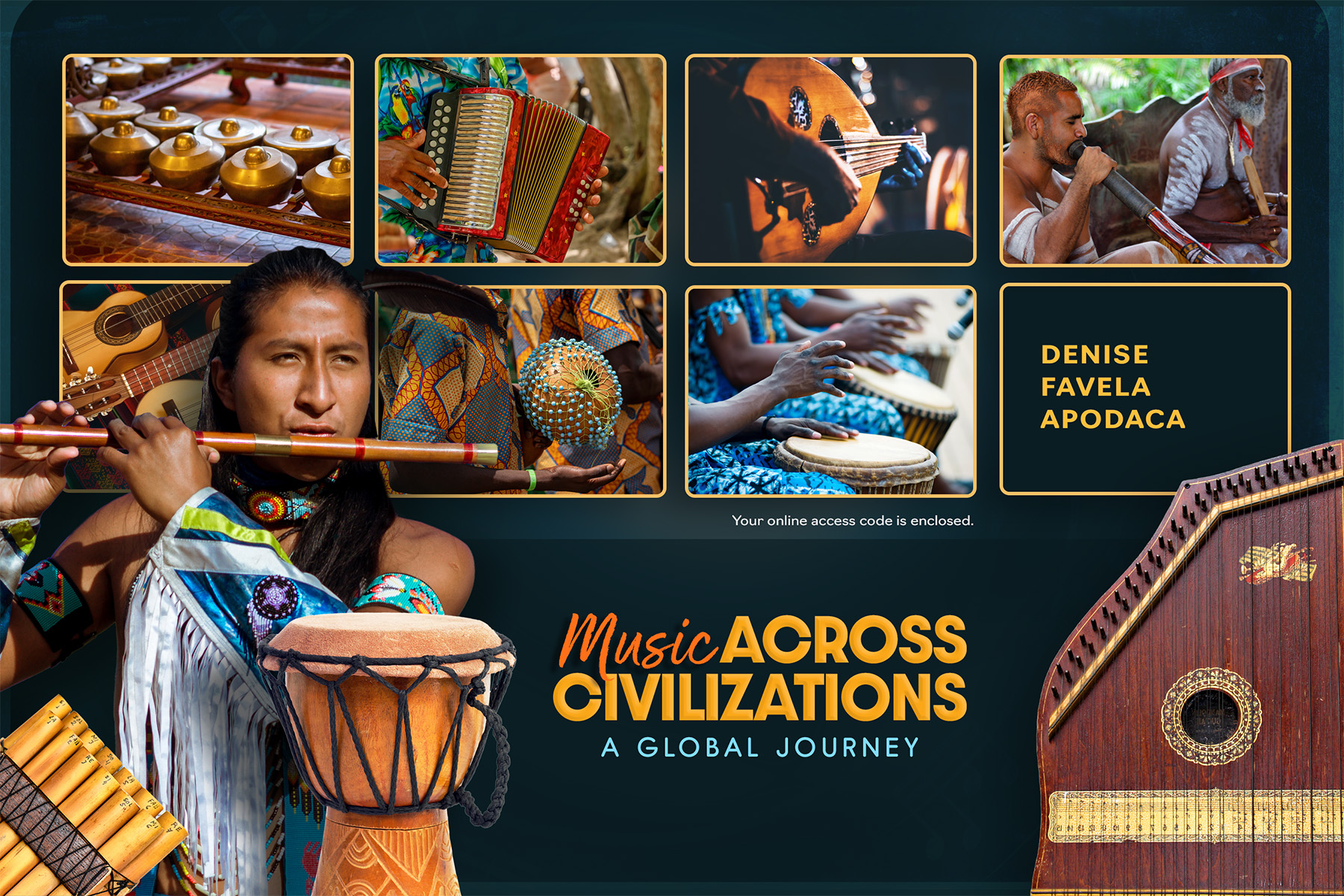
This project grew from years spent both in the classroom and in the community. I've had the privilege of working with students whose stories, challenges, and strengths have shaped not only how I teach, but why I teach. Young musicians, returning adult learners, first-generation college students, and aspiring educators have all reminded me that music is more than a subject, it’s a doorway. Again and again, I’ve witnessed how music invites empathy, evokes memory, and fosters a deep sense of belonging. I wrote this text to honor that power.
Each chapter in this book was written to center music as a lived experience, something created by people, shaped by stories, and carried through community. You’ll meet griots and gamelan players, mariachi musicians and maqam improvisers. You’ll follow music through moments of joy and resistance, migration and memory, ceremony and celebration. Instead of dividing traditions by Western categories or isolating instruments from their meaning, the chapters are shaped by regions and themes that honor music’s role in human life. Along the way, you’ll find listening activities, reflection questions, and space to think critically about issues like cultural identity, appropriation, and justice, not as abstract ideas, but as lived realities that music helps us navigate.
This book is not just about what music is, it’s about why it matters.
Thank you for being here. Whether you’re reading this for a course, your teaching, or your personal growth, I’m grateful you’ve chosen to listen alongside me. Let’s explore how music continues to tell the human story, across borders, across generations, and across time.
With warmth and gratitude,
Denise Apodaca
- Chapter 1: Rethinking “Global Music Traditions”
- Chapter 2: Elements of Music: Rhythm, Melody, Harmony, and Timbre
- Chapter 3: Music and Society
- Chapter 4: Sub-Saharan Africa
- Chapter 5: Middle East and North Africa
- Chapter 6: South Asia
- Chapter 7: East Asia
- Chapter 8: Southeast Asia
- Chapter 9: North America
- Chapter 10: Caribbean
- Chapter 11: Central and South America
- Chapter 12: Northern, Western & Central Europe
- Chapter 13: Southern & Eastern Europe
- Chapter 14: Oceania and the Pacific
- Chapter 15: Music as a Pathway for Connection