



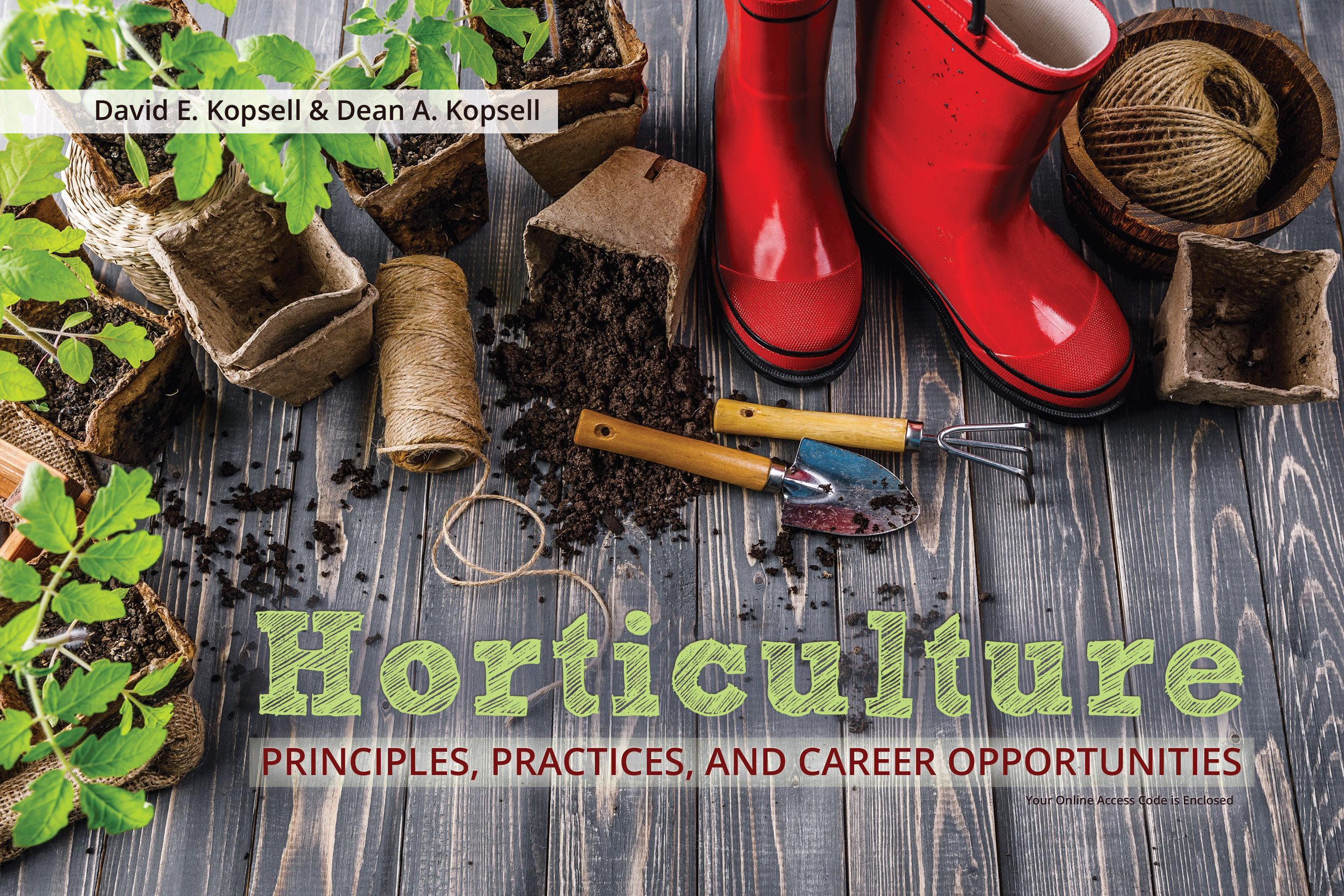
The discipline of horticulture has principles and practices that can be presented in written form, but the hands-on and experiential nature of working with plants makes the printed page a difficult delivery medium. As we learned about the format and possibilities of electronic textbooks from Great River Learning, it became more and more apparent that this was the ideal means to teach horticulture.
This reference has been modeled after the approach we each take to teaching introductory horticulture. Between the two of us, we have taught horticulture at six different colleges and universities to a broad array of students. In our classes we have strived to introduce the principles and practices of our profession, but also to describe the career possibilities of working with plants, which we feel is important information for beginning students. Currently there is a shortage of employees in the horticultural and green industries across the United States and the demand and opportunities for skilled, talented, and passionate people is greater than ever.
Because of the importance of educating students about the career potential of horticulture, our chapters have "Career Profiles" of professionals with occupations that specifically utilize the principles and practices you have just learned. Each professional provides answers to a uniform set of questions to give you information on how they found their career path, what they find most rewarding about their career, and advice they give to students interested in horticulture. As you will learn, horticulture is full of passionate individuals who find their careers very rewarding and fulfilling.
"I found the textbook both engaging and instrumental in my studies this semester.
The periodic knowledge checks, chapter summaries, and glossaries before each chapter quiz made it easy to review and retain key information. The consistent chapter structure helped me manage classwork and set clear expectations, making the material feel organized and accessible. Additionally, the images and videos throughout the text added a dynamic layer to my learning, and I appreciated how well the images were compatible with the reading software I use.
The career profiles featured in the textbook were especially impactful, offering insights into the various paths within the horticulture field. Having the opportunity to meet some of the professionals profiled was an inspiring experience, bringing the content to life and allowing me to better envision my own potential career trajectory.
Overall, this textbook has genuinely sparked my interest in expanding my knowledge and experience within the horticulture field. Thank you for crafting such a valuable resource for students like me."
- Student at Heartland Community College, Illinois
Chapter 1: History of Horticulture
Chapter 2: Naming and Classifying Plants
Chater 3: Plant Structures
Chatper 4: Photosynthesis and the Factors Affecting It
Chapter 5: Plant Growth and Development
Chapter 6: Plant Hormones
Chapter 7: Plant Propagation
Chapter 8: Plant Nutrition and Fertilizers
Chapter 9: Properties of Horticultural Soils
Chapter 10: Integrated Pest Management
Chapter 11: Pruning and Maintenance of Horticultural Plants
Chapter 12: Horticultural Crop Irrigation and Water Management
Chapter 13: Horticultural Crop Production
Chapter 14: Landscape Horticulture
Chapter 15: Horticultural Calculations and Mathematics