



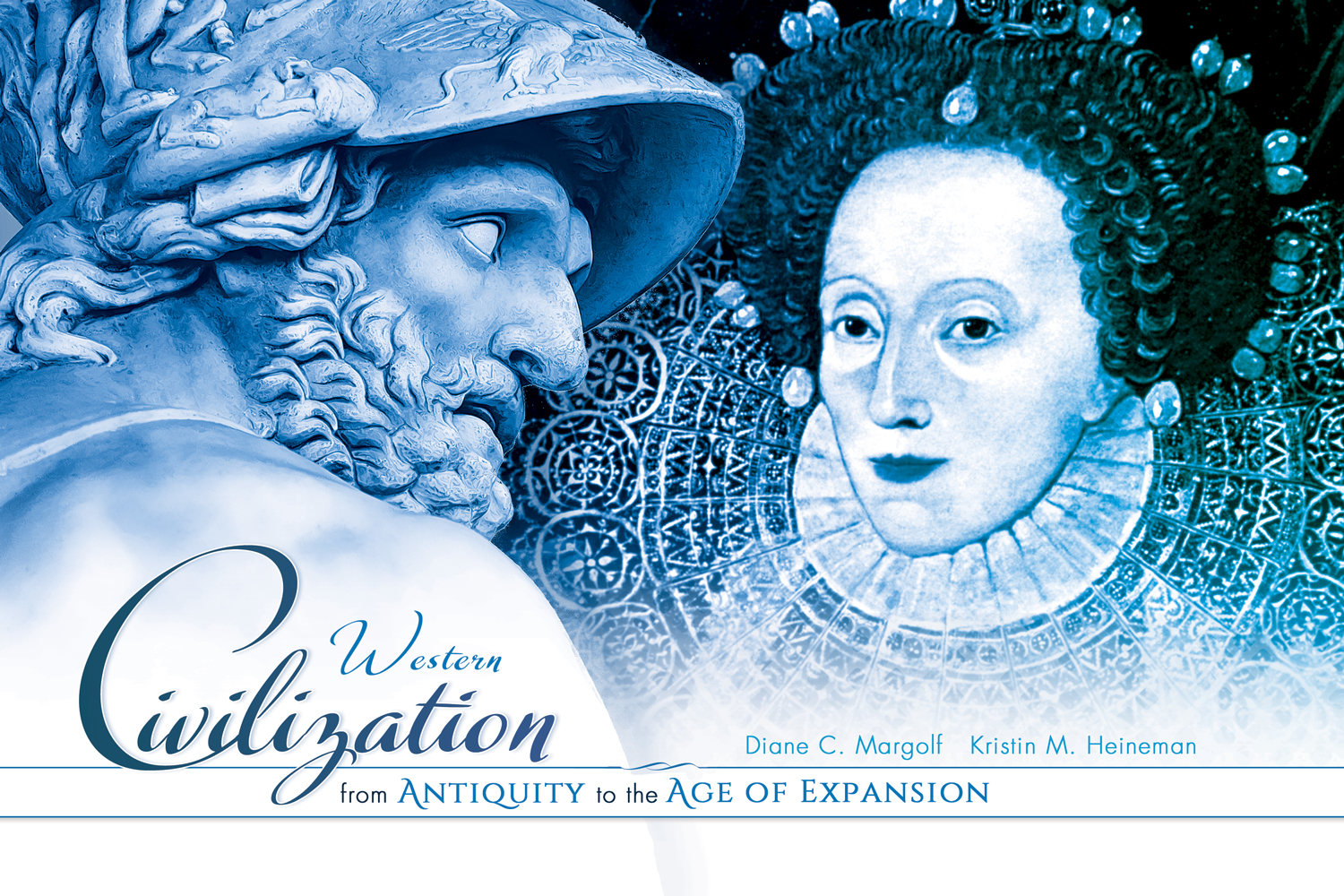
In this text, we survey the political, social, economic, religious, and cultural developments that shaped Western Civilization from the early civilizations of the ancient Near East to the emerging nation-states of the sixteenth century.
While some have suggested that the Western Civilization course should be abandoned in favor of a less “Eurocentric” and “exclusive” area of examination, studying the history, culture, and traditions of this thing we call “Western Civilization” remains a worthwhile endeavor. This is simply because Western culture continues to influence the course of world history to a considerable degree, sometimes for better, sometimes worse, and thus remains something we should examine and understand. By critically evaluating the events that occurred throughout Europe through a historic lens, a clearer picture of the undercurrents that are still at work today will be revealed.
We also introduce history as a discipline, and offer practice for some of the skills which are essential to historical study: critical reading, thinking, analysis, and writing. Additionally, this text includes a variety of primary sources written by people from the past, accompanied by images, maps, videos and web sites related to the topics covered in our text. We hope that these materials will help students to learn about the history of Western Civilization and that they will enjoy their experience as practicing historians!
- Chapter 1: Introduction to Western Civilization and Early Civilization
- Chapter 2: Early Near East and Egypt
- Chapter 3: Archaic and Classical Greece
- Chapter 4: Hellenistic Greece
- Chapter 5: Roman Republic
- Chapter 6: Roman Empire and Christianity
- Chapter 7: Late Antiquity
- Chapter 8: Byzantine Empire and Latin West I
- Chapter 9: Islam and Latin West II
- Chapter 10: High Middle Ages
- Chapter 11: Crisis of the Fourteenth-Century
- Chapter 12: Renaissance
- Chapter 13: Reformation
- Chapter 14: New World Expansion